Furka Hotspot
Near the Furka Pass, at 2440 m above sea level in the Swiss Central Alps, 47 experts gathered to examine the diversity of life in the high mountains. Located in the heart of the alpine habitat and surrounded by half of the entire flowering plant flora of the high Alps, the Alpine Research and Education Station Furka ALPFOR provided an ideal setting.
The goal was to compile the most comprehensive inventory possible of alpine organism species. In addition to 300 species of flowering plants — a true «hotspot» of diversity — algae, mosses, lichens, fungi, beetles, flies, bumblebees, wasps, butterflies, aquatic and soil organisms, as well as birds and other vertebrates were recorded, totalling more than 2000 species. Several species new to Switzerland were discovered.
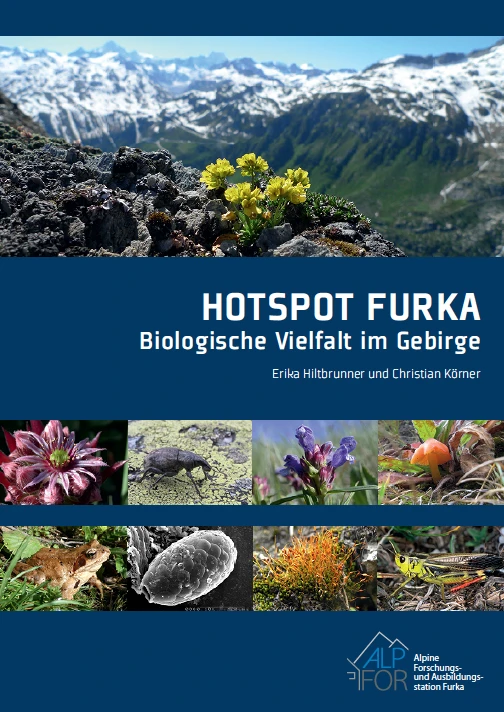
HOTSPOT FURKA — Biological Diversity in the Mountains
Editors: Erika Hiltbrunner and Christian Körner, ALPFOR and University of Basel. ISBN 978-3-033-06701-1
HOTSPOT FURKA — Biological Diversity in the Mountains (PDF)Alpine Plants
The Furka Pass is floristically one of the richest regions in the Alps. Over 300 flowering plant species can be found within one square kilometre around the ALPFOR station. The high diversity is linked to topographic diversity and the influence of calcareous substrates. The two most widespread vegetation types are Carex curvula-dominated alpine grasslands and open rock vegetation.
Furthermore, the Furka region has a series of specific habitats that contribute decisively to overall species diversity: wet and very dry micro-sites (cottongrass vs. succulents), extremely nutrient-poor and nutrient-rich sites (including natural meadows with Lilium), and a granite flora immediately adjacent to the calcareous flora.